The best celebrity profiles do not depend on a famous name. They depend on craft: a writer who prepares hard enough to ask the question nobody else thought of, listens closely enough to hear what the answer leaves out, and structures the piece so a reader cares about a person they may never have thought about before. The name gets a reader in the door. The writing keeps them there.
That is the quiet secret of the form. A great profile reads like a story about a person, but it is really a story about attention — the writer's attention to detail, to tone, to the gap between a public image and a working professional. Getting that right takes technique, not luck, and the technique can be studied.
It also takes a command of plain, accurate prose. Even the mechanics matter more than they seem to: as Grammar Den explains in its guide to subject-verb agreement, small errors like pairing a singular subject with a plural verb form undercut the polished tone a profile depends on, because precision in the sentences signals precision in the reporting. A reader who spots a sloppy verb quietly stops trusting the writer's larger claims.
Why does preparation matter more than charisma?
The writers behind the most quoted profiles are rarely the most charming people in the room. They are the most prepared. Before an interview, they read everything the subject has said publicly, watch the work, and talk to the people around the subject — collaborators, crew, critics — so the hour with the star is spent testing ideas rather than gathering basics.
Preparation changes the questions. A writer who knows the filmography cold can ask about a specific choice in a specific scene, and specific questions get specific answers. General questions get the answers the subject has given a hundred times, which is how a profile ends up sounding like a press tour. The reader can tell the difference immediately.
Preparation also protects the writer. A subject who senses that the interviewer knows the work cannot steer the conversation back to talking points as easily. The power balance in the room quietly shifts toward the person holding the notebook.
What does the writer actually do in the room?
Listening is the underrated skill. The obvious question is what the subject says. The better question is how: what lights the subject up, what gets a careful,公关-approved answer, what topic produces a pause before the reply. Those pauses are where the profile lives, because they mark the places where the public image and the private professional diverge.
Skilled interviewers also use silence. Most people fill a pause, and a famous person filling a pause often says something more honest than what they planned to say. Rushing to the next question throws that away.
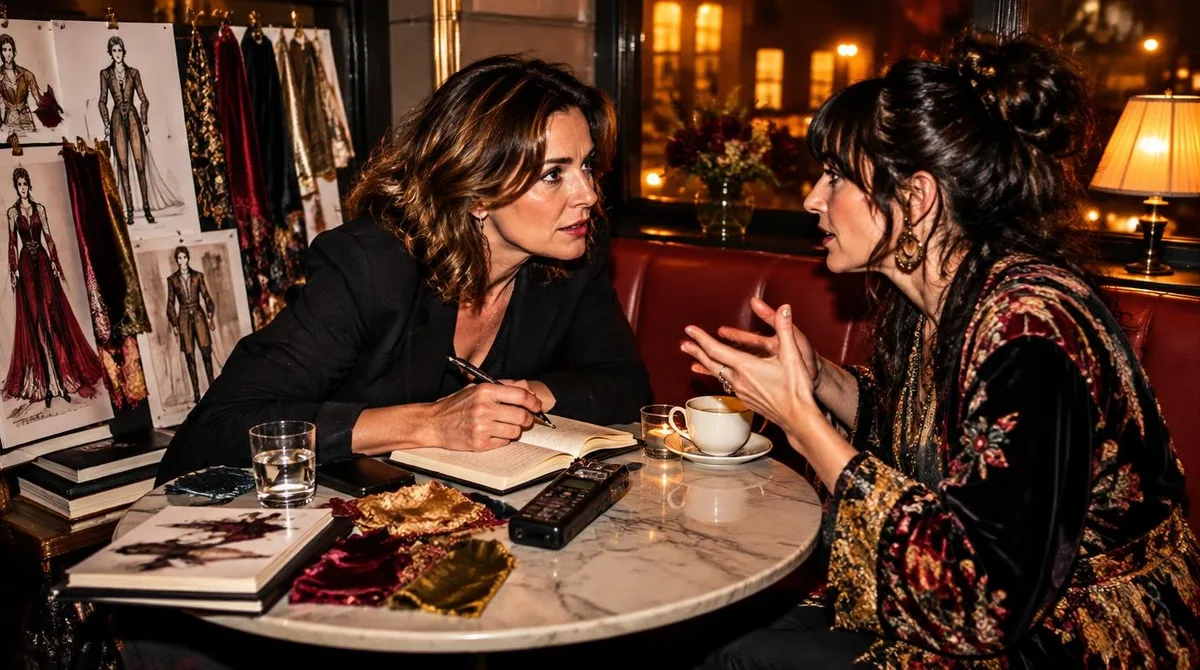
Setting matters too. Where the interview happens — a set, a kitchen, a car — shapes what the subject notices and says, and it gives the writer concrete detail to open the piece with. A scene on page one does more work than three paragraphs of résumé. For a closer look at the mechanics of the conversation itself, see our guide to how reporters get people to open up. Readers following this should also see Profile Interview Questions — The Profile Interview: How Reporters Get People to Open Up.
How does structure turn notes into a story?
A profile is not a transcript with paragraphs. The writer chooses an organizing idea — a tension, a turning point, a contradiction — and every scene, quote, and detail either serves that idea or gets cut. This is the hardest editing decision in the form: a wonderful anecdote that does not advance the argument is a wonderful anecdote that does not belong.
The opening is a promise. The best ones drop the reader into a specific moment that contains the whole piece in miniature, then zoom out to explain why that moment matters. The ending rarely announces a moral; it returns to a person or a detail from the opening and lets the reader feel the change.
Quotation is rationed like a budget. One exact, well-chosen quote from the subject outweighs ten paraphrases, and the writer's own voice carries the connective tissue. When the balance is right, the reader hears the subject clearly and the writer's argument underneath, without either drowning out the other. Our companion piece on how to write a profile that readers remember walks through this assembly step in detail.
What separates a great profile from a flattering one?
Access is not the story. A writer granted an hour with a star owes the reader honesty, not gratitude, and the great profiles are the ones where the subject is allowed to be complicated — talented and difficult, generous and guarded, right about some things and wrong about others. Flattery makes a piece disposable. Complication makes it quotable.
That requires clear ethical lines. The subject's professional life is fair game; the private life of people who did not choose fame is not. Claims about relationships, health, or legal trouble need on-the-record sourcing, not gossip. The strongest profile writers are also the most disciplined ones, because readers extend trust to writers who visibly refuse to spend it cheaply.
It also means distinguishing fact from the writer's reading. A reported detail — a credit, a date, a production fact — sits on the page differently from the writer's interpretation of that detail, and a good profile keeps the two visibly separate. When the line blurs, the piece stops being journalism and starts being advocacy.
What this means for readers and writers
Our analysis: the qualities that make a great celebrity profile are learnable, and they are the same qualities that make any long-form journalism good — preparation, listening, structure, and fairness. What the famous name adds is pressure. The subject arrives with a practiced story, a publicist, and a reason to talk, and the writer has to produce something true anyway.
For readers, the practical test is simple. Ask whether the piece told you something you did not already know, whether it showed you the person rather than the image, and whether you could trace its claims to something someone actually said on the record. If all three are true, the writer did the work.
For writers, the takeaway is to spend more time on the unglamorous parts. The reading, the transcribing, the cutting of a beloved paragraph — that is where the quoted profile is actually made. The interview is the visible tip of a much larger iceberg of decisions, most of them made alone at a desk after the famous person has gone home.
The form rewards patience over access, specificity over scale, and fairness over flair. Those are not glamorous virtues, but they are the ones that survive a news cycle — and the reason some profiles are still read decades after the subject's moment has passed.